Mobile Conversion Rate and Its Relationship with SEO
 Taha Yelkenci
SEO Consultant | | 7 min read
Over the last five years mobile usage has climbed fast. Data published in 2018 showed mobile usage rising from 59% in 2017 to 67% in 2018, and it looks set to keep climbing.
But how many of those mobile users turn into customers? According to the published figures, the average conversion rate is 3.94% on desktop and 1.84% on mobile. Those are averages and will not hold for every sector; using your Google Analytics data you can compare mobile and desktop conversion rates for your own industry, and build new actions from what you find.
Looking at those numbers, we can conclude that converting mobile users is harder than converting desktop users. So why do desktop visitors convert better?
- Desktop pages have better load speeds than mobile pages.
- Desktop users handle the main menu more comfortably and find what they want more easily.
- Filtering is more usable on desktop.
- On a desktop page the product image, description and reviews are clearer and easier to reach.
If we can research those reasons and reach conclusions, each conclusion tells us what to improve on mobile. Not every CRO strategy we use for desktop will work on mobile, but I would say the fundamentals are the same.
Even though the gap between desktop and mobile conversion is twofold, let's not forget that most traffic usually comes from mobile. The conversion rate we can improve on mobile may therefore earn more than the desktop one. That makes lifting mobile conversion a genuinely useful metric to work on.
Let's look at what we can do to optimise it.
In this article: mobile site performance, payment methods, on-site navigation, mobile UX and trust, product content, the category tree, and creating urgency.
1 — Improving mobile site performance
Mobile pages generally load more slowly than desktop ones. Since speed is a critical metric, it deserves priority. If a page takes longer than three seconds to load, 43% of users leave the site.
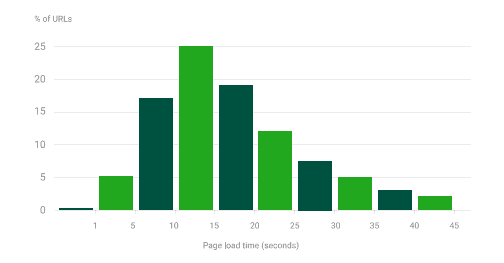
Average mobile load times have been published by sector, and three out of four sites averaged ten seconds. The same research emphasised that bringing the average below five seconds doubles the conversion rate. Speed up the mobile pages and mobile CRO can rise with them.
1.1 — How can we improve mobile performance and page speed?
- Examine every file loaded with the page in detail. Some of the files being loaded may not be used on that page at all. A CSS file might contain the rules for both the home page and the admin panel — splitting the CSS minimises file size.
- Keeping image quality high is worthwhile, because visual quality helps the user examine the product. Just do not forget to optimise the file sizes.
- Rather than loading the whole page at once, prioritise loading it in layers. If the user's purpose is to inspect the product, loading the image first makes sense. These priorities can be tuned to user intent.
A few tools for mobile speed
- Unused-CSS shows you the unused CSS rules on your pages.
- Pingdom shows you which files run in which order as your pages load.
- Dareboost does both of the above and goes as far as suggesting how to fix the problems it finds.
- The tool I use most: Chrome DevTools. For speed work it is the most useful of the lot.
- And for anyone who wants flawless results, Google Developers.
2 — Enriching payment methods and simplifying checkout
Making users type extra information during checkout is tedious and hurts the sale. My view is always that the user should complete the purchase with the fewest possible clicks and fields. On mobile pages in particular, even a user who likes the product can struggle with entering payment details and give up. Optimising those steps lifts mobile CRO.
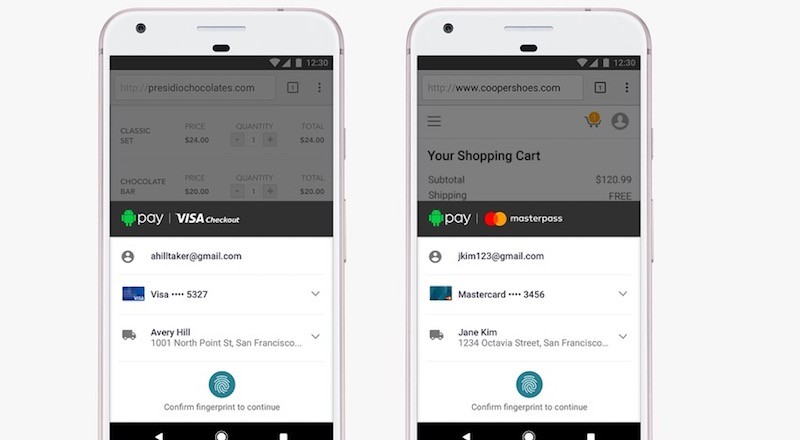
Here I would suggest Masterpass as an alternative payment method. On sites using it, the purchase can be completed by entering only a phone number and the code that arrives by SMS — two steps. Compare that with a credit card, where users can abandon at the tedious steps: card number, name, CVC, confirmation code.
3 — Improving on-site navigation
On mobile sites, and especially on e-commerce, optimising navigation is genuinely hard — and just as important. The user does not know where to tap; they are meeting the site for the first time. Guiding them and meeting their need by the shortest route produces results.
3.1 — Autocomplete in the search field

Amazon does this very well. Autocomplete in the search field helps the user find what they came for. On this topic you can read John Komarek's article, which shares tips on using in-place filtering.
4 — Improving mobile user experience and trust
One of the feelings that triggers a purchase is trust. The look of the site, its design, its layout and its colours all become a measure of trustworthiness in the user's mind.
If our mobile site cannot fulfil the user's purpose, if the infrastructure falls short, if it is not easy to use, it looks amateur and inspires no confidence.
In short, improving the experience will absolutely lift mobile CRO. So we need to make changes that let mobile users move around and find what they want with very little effort.

On this product page the rating, the quantity, the coupon field, add-to-cart and the product image — most of what the user needs through the purchase steps — sit on the same screen. They can act on much of it without scrolling.
5 — Enrich your product content
5.1 — Video content for products
Catching the user's attention is the first step towards a conversion. According to data from Wyzowl:
- 79% of consumers prefer to watch a video rather than read a product description.
- 84% of consumers bought something after watching a video.
- 90% of consumers watch videos on a mobile device.
To market video content we can open a video pop-up on mobile pages. It must be used in a way that does not irritate the user, and the video should give them everything they need to know about the product.

Rather than showing that pop-up always or the moment the page loads, showing it after the user has scrolled two or three times or reached the product description improves the experience.
Used badly, it can damage your SEO. I would recommend this article on using pop-ups without hurting SEO and Rand Fishkin's video.
5.2 — Natural product photography
Seeing a product only in terms of size, dimensions and colour is sometimes not enough. Knowing a wallet is 10x8 cm may not answer the real question: will it look big or small in my hand?

By discovering the details users pay attention to during the purchase, we can develop new ideas for images and content.
6 — Optimising the category tree
One of the most important yet most overlooked aspects of mobile conversion is the product category page. Letting users reach what they want as easily and quickly as possible has a real effect on their decision to buy.
6.1 — Some tips for category listings
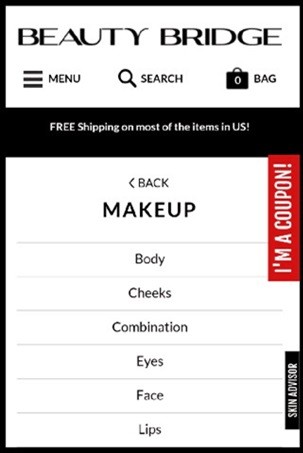
- Include a "Back" button in the category design.
- Make steps such as breadcrumbs wide and tappable.
- Present products in logical categories.
- Keep the most important categories (best-selling, highest-margin) easy to reach.
7 — Creating a sense of urgency
In marketing, creating urgency works for lifting conversions. The finest example is the $717 billion spent worldwide on Black Friday. During short-lived discounts users feel that urgency and purchase rates rise.
7.1 — Urgency needs an atmosphere of trust
Trust has to come first. Speak the same language as your users. Whichever feature of your product beats the competition, highlight it by comparison.
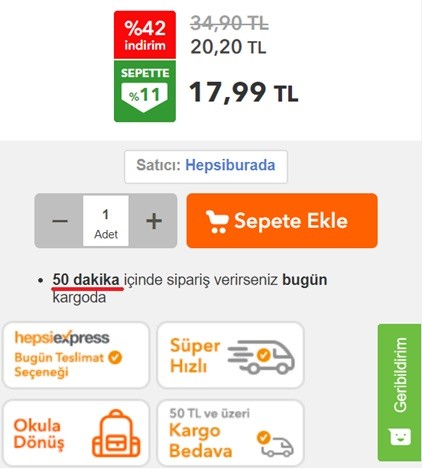
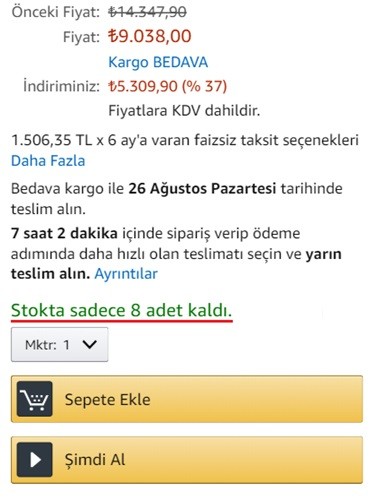
Trust is established around the price, and then urgency is created with a note such as "orders in the next 50 minutes ship today". Highlighting stock levels, as Amazon does, creates urgency too.
I plan to keep updating this article with new tips as time allows. If you have original tips of your own, leave a comment.
Taha Yelkenci
SEO since 2010. Founder of rankZup. Got a question? Write to me →
← Previous post
Why User Intent Matters in SEO and Content Marketing [Video]
Next post →
How to Do Data Analysis in SEO