Why User Intent Matters in SEO and Content Marketing [Video]
 Taha Yelkenci
SEO Consultant | · updated: 2020-01-25 | 5 min read
![Why User Intent Matters in SEO and Content Marketing [Video]](https://tahayelkenci.com/wp-content/uploads/2019/04/kullanici-niyeti4.jpg)
Picture this. You are a company that sells artificial turf exclusively for five-a-side football pitches. Your turf is rubber-backed and cannot be used in gardens.
You want organic traffic from Google to grow your sales. Which keyword would you want to rank on the first page for?
Did "artificial turf" come to mind first? It did for me.
But when I researched the term, the people making that search were not looking for football pitches at all — they wanted good-looking, even colourful, artificial grass for around the house and the garden.
Is that our audience? No. This is exactly where user intent becomes decisive, and where the keywords we want to target change.
Let me give you another example from my own work.
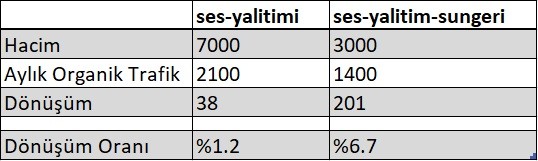
A client of mine manufactures sound-absorbing foam for insulating rooms such as music studios and cinemas. When we first met, they asked me to raise their visibility for "sound insulation".
Looking at the keyword, its volume was higher than every other term we could target in the sector (7K).
But the people making that search are mostly browsing for information and ideas. Their intent to buy is weak.
We did succeed with the keyword the client wanted — but alongside it we targeted terms such as "sound insulation foam" (3K volume).
This time I made my point with data: there was a threefold difference between the unique traffic-to-conversion rate of the sound-insulation page and that of the sound-insulation-foam page. Even though we ranked second for both terms, the "foam" page produced more conversions and a better rate.
That way of thinking is what we have to change. We should start with research and build our content already knowing what the person making the query wants.
"Produce the content in the way that best matches the purpose behind the query."
So how do we analyse user intent?
Let's go a little deeper and find new ways of uncovering intent.
Using the SERP to understand intent better
We cannot know the intent behind every query with total certainty; different people make the same search for different reasons. What we want to find is which intent dominates — and then build our strategy around it.
At this point we have to trust the SERP, because Google knows user behaviour better than we do. Search results cannot serve every intent at once, but they will surface the one most often intended.
Of course, trusting the top-ranked sites blindly on every topic would be a mistake. There will be times when our own judgement or our own data has to come first.
Reading intent with help from Ads
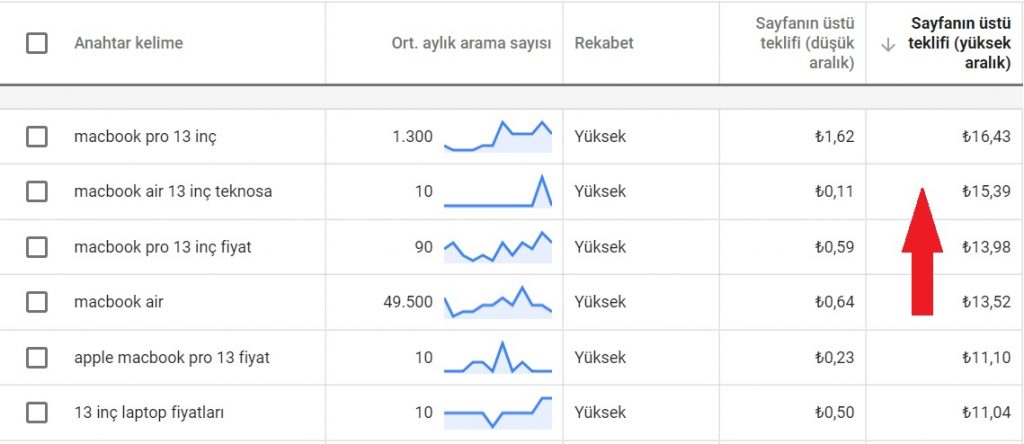
Say we want to target the users with the strongest intent to buy. When we sort the relevant terms by top-of-page bid in the Ads Keyword Planner, we can assume competition is high on the highest-bid keyword — and infer that the people searching those competitive terms have a stronger purchase intent.
Reading intent from the organic results
Search your target keyword on Google and study the first five results. Looking at the content of those five pages you will find shared patterns, and those patterns let you interpret the user's intent.
The top three results are likely the pages that answer the intent best, which makes them particularly worth studying.
Modifiers that change the intent of a query
Some words, added to the beginning or the end of a query, change the user's intent entirely. People searching "13 inch macbook", for instance, may want specifications and prices.
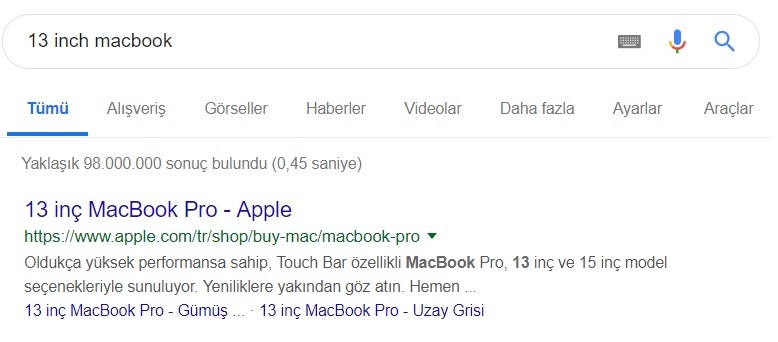
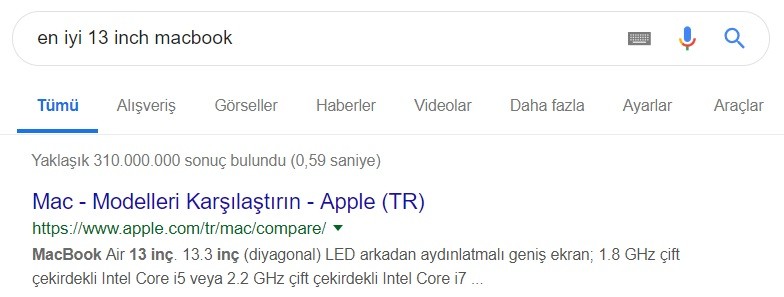
But someone searching "best 13 inch macbook" wants a comparison — and in those results we see comparison pages ranking first.
Anyone who wants to dig further into the words that change query intent should read Moz's article on the subject.
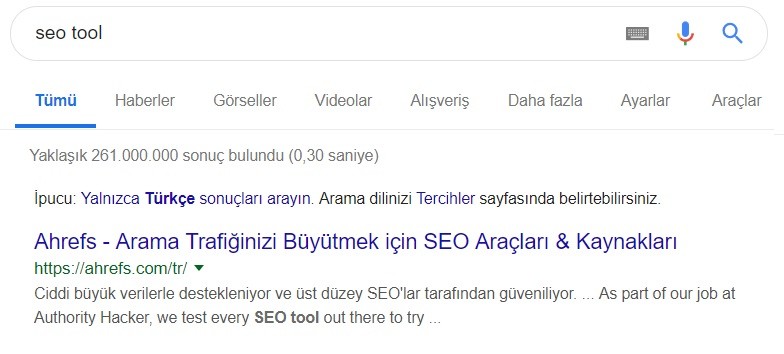
Another example: sometimes a simple plural changes the intent. For "seo tool", Ahrefs ranks first.
For "seo tools", a page listing tools takes first place.
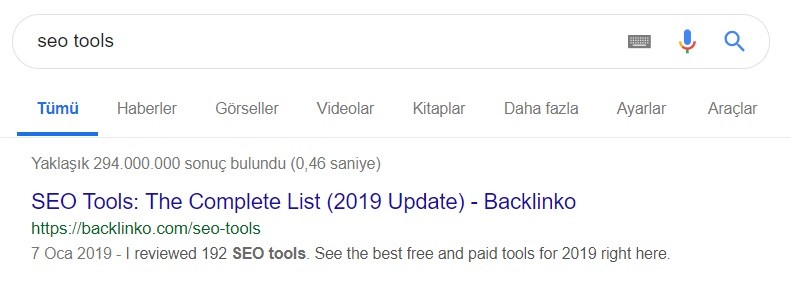
As this example shows, the plural changes the search intent: users want a result that lists tools and lets them compare.
How to group keywords by intent
We can split the keyword list we plan to target into intent-based categories, grouping terms whose intent is the same or similar — and then produce content that serves the purpose of each group.
But hold on: for me to sell, the user has to reach the product page. If someone who wants a comparison lands somewhere other than the product page, doesn't that hurt conversion?
You cannot make someone who came to compare do something outside their purpose anyway. Perhaps they are comparing one last time before buying. Serving a user something outside their intent will hurt SEO performance too.
Intent-based grouping for e-commerce sites
E-commerce may be the sector where user intent matters most. Let's split intent into four groups: ready to buy (transactional), researching products (navigational), gathering information (informational) and not going to spend anything (other).
1 — The group closest to buying (transactional)
People closest to purchase are generally ready to pay, and this is where we can capture the highest conversion rate. Their searches carry modifiers such as "buy", "coupon", "discount" and "free shipping".
2 — Product researchers (navigational)
These users want to examine products before deciding. We need to help them with the landing page best suited to persuading them. This group uses modifiers such as "best", a brand name, or "cheap".
3 — Informational queries
Queries made to learn something convert less well than the first two groups. This group uses phrases such as "how to buy".
4 — The ones who will not spend (other)
This group searches with words such as "free", "gratis" and "download". Converting them is the hardest job of all. Build a mailing list and aim for conversion later, when they are in a position to buy.
Taha Yelkenci
SEO since 2010. Founder of rankZup. Got a question? Write to me →