The Best SEO Practice for Discontinued Products
 Taha Yelkenci
SEO Consultant | · updated: 2019-05-10 | 3 min read

When products in an e-commerce store go out of stock temporarily or permanently, those product pages become unusable. So what should you do to handle that as well as possible for both SEO and UX?
As with many things in SEO, there is no single right answer to what you should do with a discontinued product page. The answer changes with the situation:
- Does the product page receive organic traffic?
- Does the page have valuable backlinks?
- Was the product removed temporarily or permanently?
Many variables like these can apply.
They are worth asking, because they affect your site's technical optimisation, its user experience and its SEO.
If the product is out of stock temporarily
If the product has only been pulled temporarily, the best situation is to leave the page live rather than close it. Since the page will be unusable only for a while, it is perfectly reasonable not to want a 404 or a 301 on it.
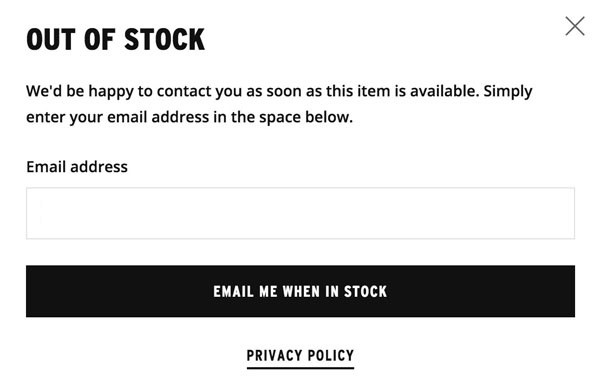
You will, however, need a few changes from the technical team, because you have to tell users the product is not on sale. Dropping a user onto a page for a product they cannot buy hurts the experience. Explain that the product is temporarily unavailable and, where possible, when it will be back. And remove the add-to-cart function to avoid confusion.
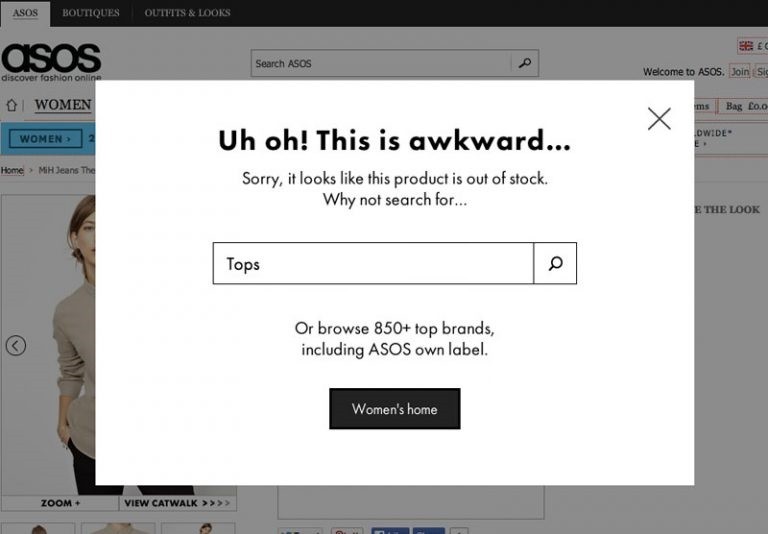
Remember that a user landing on an out-of-stock page has a bounce rate of 100%. To reduce that you can offer similar products as alternatives, bring the search function forward, or add a sign-up form that emails the user when the item is back in stock.
What to do when a product is removed permanently
When a product is discontinued for good there are a few options.
The first is simply to let the page return a 404. For mid-sized e-commerce sites this can genuinely be the answer — Matt Cutts says in his video that you can resolve the situation with a 404. Since we are sure the product will never be sold again, serving a 404 makes sense: the page will bring you nothing from here on. But instead of a standard 404, you can improve the experience by recommending related products.
One thing to watch: 404 pages are disliked by users and by Google alike. Serving 404s means Googlebot keeps crawling pages that no longer exist, and part of your crawl budget is wasted.
At this point you should assess whether the page receives organic traffic and, more importantly, whether it has quality backlinks. Serving a 404 throws away everything the page earned. Remember that backlinks are among the most important factors in SEO.
So if you have a product that will never be sold again, redirecting the page with a 301 to a relevant page is the sensible move — it protects the backlinks, the organic visits and the value of the page.
Before disposing of removed product pages, check what they are worth; tools such as Ahrefs, Majestic and Moz will tell you.
Make sure the page you 301 to is as relevant as possible. Bearing in mind that the destination product could itself be discontinued one day, redirecting either to the category page or to a similar product is sensible.
From a UX point of view, redirecting without explaining anything can degrade the experience. If you tell the user with a dynamic message that the product is out of stock and that is why they were redirected, the products on the new page have a real chance of interesting them.
Taha Yelkenci
SEO since 2010. Founder of rankZup. Got a question? Write to me →